




 Brunches in Japan
Introduction to Japanese Gastronomy
Japan boasts a staggering number of three-star Michelin restaurants, outpacing almost every other nation on earth. This guide maps out the necessary culinary journeys you should undertake, detailing specific locations, dishes, and local protocols. Finding the Best Food Experiences in Japan for Travellers requires curiosity blended with careful planning.
The Art of Kaiseki Ryori
Kaiseki ryori stands as the peak of Japanese fine dining, rooted in the ancient tea ceremony customs of Kyoto. This multi-course feast honors seasonal ingredients, artistic presentation, and a careful balance of flavor, texture, and color. For those seeking culinary depth, exploring kaiseki is often ranked among the Best Food Experiences in Japan for Travellers.
Most kaiseki dinners consist of nine or more individual courses served on fine ceramic and lacquer dishes. Chefs select ingredients at their absolute peak freshness to mirror the exact moment of the year. Kyoto remains the global heart of this dining style, where historic districts like Gion host centuries-old establishments.
A standard kaiseki menu follows a specific structure designed to showcase distinct cooking methods.
- Sakizuke: An appetizer similar to an amuse-bouche, showcasing seasonal flavors.
- Mukozuke: A seasonal sashimi course served on a bed of shredded daikon radish.
- Takiawase: Vegetables simmered with tofu, fish, or meat, highlighting subtle dashi broth.
- Gohan: A rice dish cooked with seasonal ingredients, served alongside miso soup and pickles.
Navigating Japan’s Lively Street Food Markets
Street food markets provide a sharp contrast to formal dining rooms, offering immediate access to fresh, local delicacies. Visiting bustling fish markets like Tsukiji Outer Market in Tokyo delivers some of the Best Food Experiences in Japan for Travellers who enjoy fresh seafood. These lively areas allow you to sample high-quality ingredients at a fraction of standard restaurant prices.
Osaka features its own famous food market called Kuromon Ichiba, which spans over 500 meters of covered shopping streets. Visitors can walk from stall to stall to purchase individual skewers of grilled wagyu beef, giant scallops, and sea urchin. These markets open early in the morning and peak around midday, making them ideal for lunch.
When exploring these open-air food markets, you should sample several iconic local specialties.
- Takoyaki: Savory batter balls filled with minced octopus, topped with sweet brown sauce and bonito flakes.
- Yakitori: Skewered chicken grilled over binchotan charcoal and basted with savory tare sauce.
- Taiyaki: Fish-shaped waffles filled with sweet red bean paste or rich vanilla custard.
Regional Ramen Exploration
Ramen is a staple comfort food that has evolved into a highly specialized culinary art form across Japan. Each prefecture boasts its own unique broth style, noodle thickness, and topping combinations. Exploring these regional variations is widely considered one of the Best Food Experiences in Japan for Travellers.
Fukuoka is famous for its Hakata ramen, which features a rich, creamy pork bone broth known as tonkotsu. Thin, firm noodles pair perfectly with the heavy broth, which chefs simmer for up to twenty hours. Diners can request noodle refills, called kaedama, for a small fee when they finish their first serving.
In contrast, Sapporo on the northern island of Hokkaido is the birthplace of miso ramen. This style relies on a robust miso paste base, thick wavy noodles, and toppings like sweet corn, butter, and local seafood. The heavy layer of oil on top keeps the soup piping hot in the cold northern climate.
Comparison of Iconic Regional Ramen Styles
| Region | Ramen Style | Broth Base | Noodle Type | Signature Toppings |
|---|---|---|---|---|
| Fukuoka (Hakata) | Tonkotsu | Rich, creamy pork bone | Thin and straight | Chashu pork, green onions, wood ear mushrooms |
| Sapporo | Miso | Robust, savory miso paste | Thick and wavy | Sweet corn, butter, local seafood, bean sprouts |
| Tokyo | Shoyu | Clear, soy-sauce infused dashi | Medium-curly | Menma (bamboo shoots), nori seaweed, soft-boiled egg |
Dining Etiquette and Cultural Protocols
Understanding dining etiquette prevents misunderstandings and shows respect to your hosts. Japanese food culture relies on subtle rules that govern how people interact with their meals and servers. Mastering these simple behaviors will enhance your comfort level in traditional restaurants.
Tipping is not practiced in Japan, and leaving cash on a table can cause confusion or distress to staff. The bill is usually paid at a register near the exit rather than at the table. Many traditional establishments accept only cash, so carrying yen is necessary for smooth transactions.
Adhering to these basic guidelines will ensure a smooth dining experience throughout the country.
- Slurp your noodles: Slurping draws air into the mouth, cooling the hot broth and releasing more aroma.
- Use chopstick rests: Never stick your chopsticks vertically into a bowl of rice, as this mimics a funeral ritual.
- Say appreciation phrases: Say itadakimasu before eating and gochisousama deshita after finishing your meal.
Izakaya Culture and Casual Dining
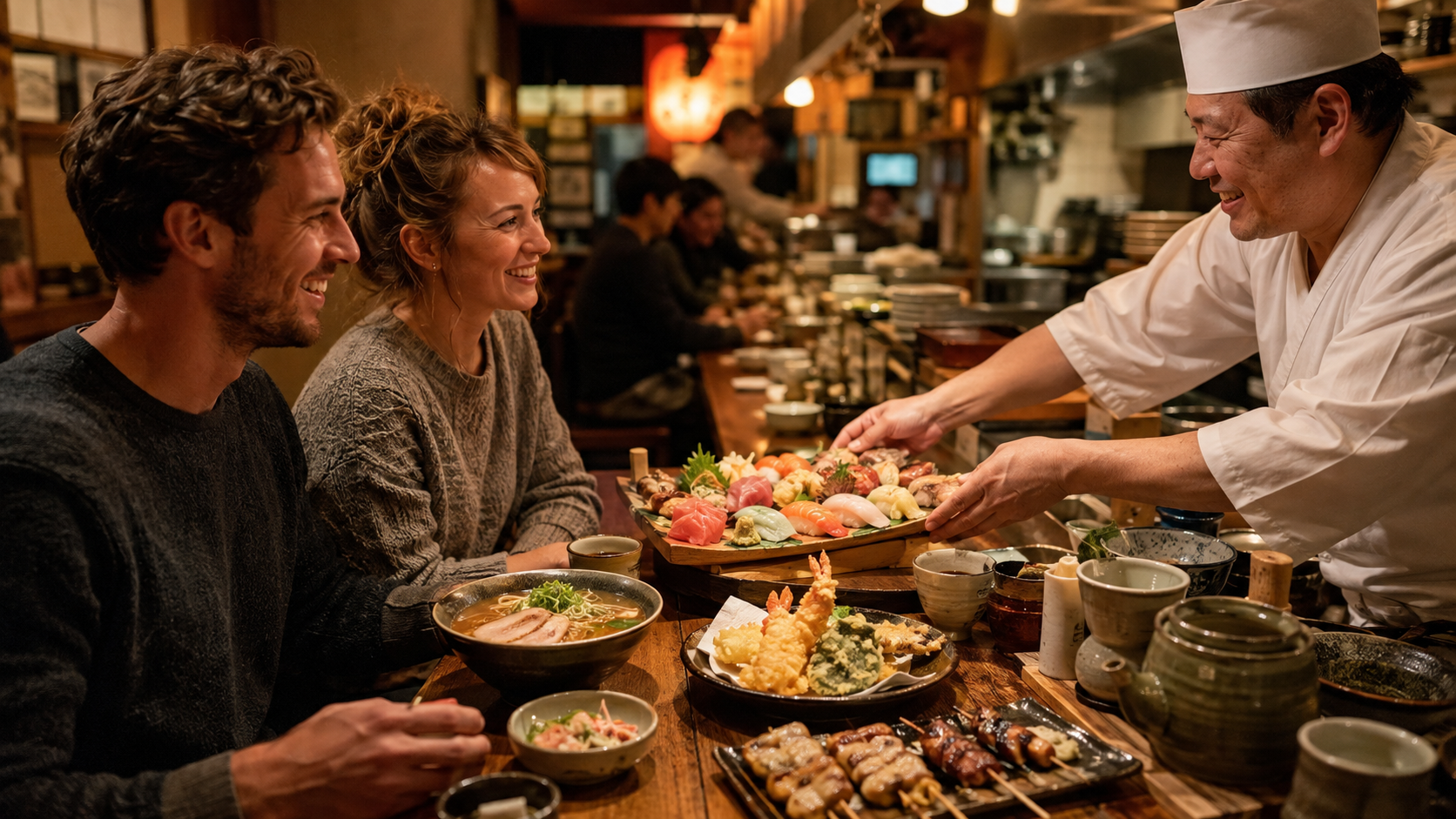
An izakaya is the Japanese equivalent of a pub, serving small plates designed to accompany alcoholic beverages. These establishments feature a lively, informal atmosphere where coworkers and friends gather after work. Dining at a local izakaya offers a fantastic way to seek out the Best Food Experiences in Japan for Travellers alongside locals, providing a relaxed and social atmosphere.
Ordering at an izakaya typically involves choosing multiple small dishes to share with your table. Popular menu items include edamame, fried chicken karaage, grilled skewers, and sashimi platters. Most izakayas use digital tablets with English translation options, making ordering straightforward for international visitors.
The Precision of Edomae Sushi
Edomae sushi relies on preservation techniques developed during the Edo period before refrigeration existed. Chefs cure fish in salt, marinate it in soy sauce, or simmer it in broth to enhance the natural umami flavors. Savoring an authentic omakase meal is frequently highlighted as one of the Best Food Experiences in Japan for Travellers seeking historical depth and culinary mastery.
High-quality sushi restaurants, or sushiya, often serve meals in an omakase format, which translates to leaving the choices to the chef. The chef selects the best seasonal fish available at the market that morning and serves it piece by piece. Eating each piece immediately ensures the rice remains at body temperature, which is best for flavor.
Maximizing Your Culinary Journey
Exploring Japan through its food traditions offers a deep view of the country’s regional history, geography, and cultural values. Choosing a variety of environments like formal kaiseki rooms, lively izakayas, and busy seafood markets provides a balanced perspective. Diving into these local customs ensures you enjoy the Best Food Experiences in Japan for Travellers during your journey.
By planning your meals around seasonal specialties and showing respect for local etiquette, you will unlock the true spirit of Japanese gastronomy. The memories of these exceptional meals will linger long after your return home. These choices lead to the Best Food Experiences in Japan for Travellers.


Comments are closed