




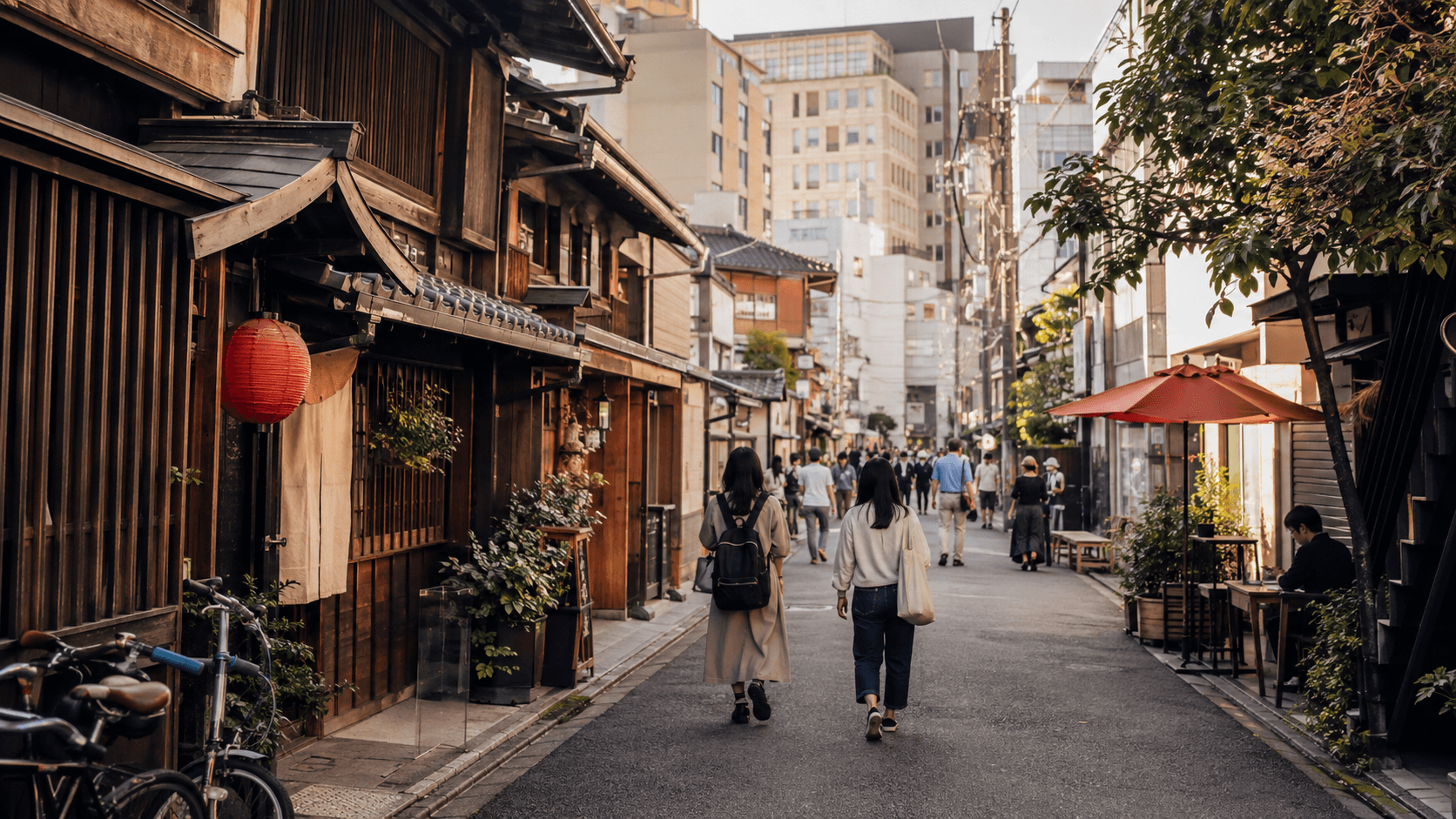
 Japan Neighbourhoods
Japan plays host to thousands of individual neighborhoods, yet average vacationers only ever scratch the surface. True discovery lies far beyond the neon-lit major transit hubs. This breakdown highlights specific spots holding deep historical weight and rare local appeal.
Wandering through these quieter zones demands local insight. Relying on A Local Guide to Japan’s Most Interesting Districts remains the simplest path to sidestep crowded spots and find genuine neighborhoods.
Tokyo’s Side-by-Side Eras
Tokyo exists as a city of stark contradictions, where sleek skyscrapers loom over fragile wooden homes. Yanaka stands out as a rare survivor of mid-century destruction. Walking down these streets feels like slipping back into the early decades of the twentieth century.
While crowds swarm Shibuya and Shinjuku, checking A Local Guide to Japan’s Most Interesting Districts reveals tucked-away spots like Yanaka. An Edo-period street layout still defines this low-rise residential area. Visitors can wander past tiny artisan workshops and stop at quiet temples to snack on classic sweet potato cakes.
Over on the western side of the capital, Kichijoji provides a totally different pace of life. Reading A Local Guide to Japan’s Most Interesting Districts helps travelers understand why locals rank this neighborhood so highly. Its proximity to Inokashira Park makes it a favorite spot to rent swan boats when spring blossoms arrive.
- Harmonica Yokocho: A tight grid of alleyways lined with minuscule food stalls and standing bars that buzz with life after sunset.
- Inokashira Park Zoo: A calm haven showcasing native wildlife alongside shaded walking paths.
- Ghibli Museum: A playful exhibition space dedicated to the famous animation house, sitting right on the park boundary.
Kyoto’s Time-Worn Corners
Kyoto draws millions for its temples, but its quiet residential quarters hold the real magic. While travelers flock to Gion for a glimpse of geisha, other spots nearby offer peace. Fushimi stands out for its underground spring water and centuries-old brewing culture.
To find these ancient traditions, consulting A Local Guide to Japan’s Most Interesting Districts leads you away from crowded lanes to the peaceful canals of Fushimi. Willow trees drape over waterways where wooden flat-bottom boats drift. Several active breweries here have kept their fires burning since the sixteen-hundreds.
Nishijin is another historic pocket, known for its deep connection to textile arts. In this weaving district, rhythmic clacking from wooden looms echoes out of traditional machiya townhouses. Checking A Local Guide to Japan’s Most Interesting Districts points travelers toward workshops where master weavers still spin fine silk for kimonos.
Osaka’s Retro Streets and Street Food
Osaka runs on a faster, louder energy. Opening A Local Guide to Japan’s Most Interesting Districts leads directly to Shinsekai. Designed in 1912 with amusement parks and Parisian streets in mind, this block now serves as a time capsule of mid-century Japan.
Massive neon signs, giant paper fish lanterns, and the steel frame of Tsutenkaku Tower fill the skyline. Food acts as the main draw, especially the local specialty called kushikatsu. Diners traditionally dip these fried skewers of meat and vegetables into shared sauce exactly once to respect the famous local custom.
- Tsutenkaku Tower: A symbol of local resilience that offers broad views over the city grid.
- Kushikatsu Eateries: Busy counters where cooks fry skewers right before your eyes.
- JanJan Yokocho: A historic covered alley packed with old-school board game clubs and cheap food stalls.
Summary of Featured Japanese Districts
| District | City | Main Vibe | Key Attraction |
|---|---|---|---|
| Yanaka | Tokyo | Nostalgic Edo-era | Historic temples & craft shops |
| Kichijoji | Tokyo | Trendy & green | Inokashira Park & Ghibli Museum |
| Fushimi | Kyoto | Traditional sake brewing | Sake breweries & willow canals |
| Nishijin | Kyoto | Traditional weaving | Machiya townhouses & silk looms |
| Shinsekai | Osaka | Retro Showa-era | Tsutenkaku Tower & Kushikatsu |
Local Etiquette for Wandering Off the Beaten Path
Wandering down hidden side streets requires a solid grasp of local social norms. Showing respect for residents is vital when passing through quiet residential zones. Visitors should avoid eating while walking or speaking in loud voices.
Following small habits, like keeping to the correct side of the path, is highly valued. According to A Local Guide to Japan’s Most Interesting Districts, carrying a small bag for your trash is smart because public bins are rare. Keeping yen coins handy is also key, as many small shops reject card payments.
- Keep cash on hand because family-run businesses rarely take cards.
- Lower your voice when walking through residential alleys at night.
- Carry a small bag to take your trash back to your lodging.
Finding the Real Japan
Stepping into these quieter zones provides a direct window into daily life. From Kyoto’s silent pathways to Osaka’s retro lights, every corner has its own tale. Building a trip around these neighborhoods ensures a deep and memorable journey.
Ultimately, having A Local Guide to Japan’s Most Interesting Districts turns a standard vacation into a deep cultural experience. Travelers can connect with local craftspeople, taste real regional dishes, and build lasting memories. Moving slowly allows you to notice the quiet charm of each neighborhood.


Comments are closed